
Research has not shown trauma stored as a memory inside a muscle. What can stay is a learned threat response.
That is an alarm system that keeps reacting to reminders of danger long after the danger has passed. The response is physical, and it can change. In South Africa, 73.8% of adults have been through a potentially traumatic event. Only 3.5% of those exposed develop post-traumatic stress disorder (PTSD).
If this sounds like you, you are not alone. When did your body last feel fully off duty?
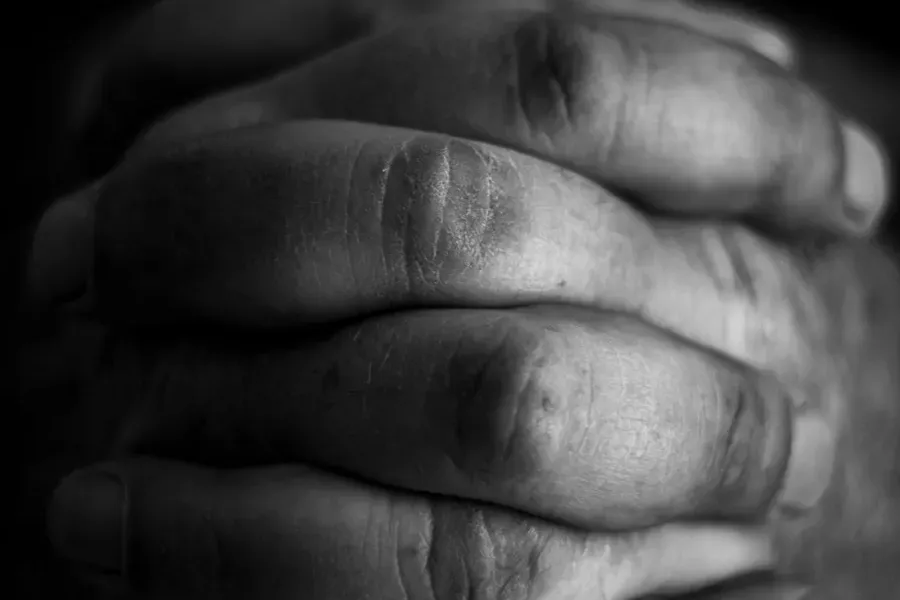
What People Mean by Trauma Trapped in the Body
The phrase describes a body that still reacts as if a threatening event is happening, even though it is over. The idea reached a wide audience through the psychiatrist Bessel van der Kolk and his book The Body Keeps the Score (2014).
In his original 1994 paper, van der Kolk described trauma as stored in somatic memory and expressed as changes in the biological stress response. That was a theoretical proposal about the stress response, rather than a finding that memories sit inside tissue.
The research term for what happens is fear conditioning. During a threatening event, the brain links whatever was present to danger: a sound, a smell, a time of day, a body position. Afterwards those cues can set off the body’s alarm on their own.
In people with PTSD, that alarm is also harder to switch off. A 2009 study by Milad and colleagues found impaired recall of extinction memory, the safety learning that normally tells the body a cue is no longer dangerous. Kausche and colleagues’ 2025 meta-analysis of 77 studies of anxiety-related conditions, including PTSD, found stronger reactions to threat cues. It also found heightened responses even to cues that signal safety.
The alarm can outlast the event.
What Research Shows the Body Holds After Trauma
Research shows measurable changes in how the body reacts after trauma, such as a faster heart rate around reminders of the event and a nervous system that stays on guard. It does not show memories lodged in particular tissues. The table separates what is well supported from what is not.
| Body response | What research found | Strength of evidence |
|---|---|---|
| Reactions to trauma reminders | Pole’s 2007 meta-analysis found a faster heart rate and more facial muscle tension in people with PTSD when they faced reminders of the event | Consistent, small to moderate effects |
| Startle | People with PTSD may be more easily startled by sudden movements or loud noises, according to the World Health Organization | Recognised PTSD symptom |
| Hyperarousal | Hyperarousal, including hypervigilance, anger and irritability, is one of the PTSD symptom groups listed in the NICE guideline | Recognised clinical symptom group |
| Chronic pain | About 1 in 10 people with chronic pain also have PTSD (9.7% in Siqveland’s 2017 meta-analysis and 9.8% in Fishbain’s 2017 systematic review) | Association, with wide variation between studies |
| Physical disease after childhood adversity | Four or more adverse childhood experiences are linked to roughly double the odds of heart and cardiovascular disease, compared with people with none (odds ratios of 2.2 in Felitti’s 1998 study and 2.07 in Hughes’s 2017 meta-analysis) | Association, not proof of cause |
| Memories stored in muscle or fascia | Not demonstrated in research; Tozzi’s 2014 editorial in the Journal of Bodywork and Movement Therapies called tissue memory a controversial topic and offered interpretations rather than data | Not supported |
Trauma changes how the nervous system predicts danger. The body carries out those predictions through heart rate, breathing, muscle tone and sleep.
Muscle guarding is real. The threat response drives it, so it may ease as the alarm system settles. That is the rationale behind regulation-based work.
A tensed muscle is following orders.
Most Trauma Does Not Stay: The South African Numbers
Most people who go through trauma recover without developing PTSD. The South African Stress and Health Study, a nationally representative survey analysed by Atwoli and colleagues, found that 73.8% of South African adults had been through at least one potentially traumatic event.
Lifetime PTSD affected 2.3% of adults in the same study. Among the people exposed to trauma, 3.5% developed PTSD, which is about 3 or 4 in every 100. The most common traumas were the unexpected death of a loved one and witnessing a traumatic event.
The study’s data were collected between 2002 and 2004. Its authors note the PTSD figure is likely an underestimate. The global picture is similar. Across 24 countries in the World Health Organization’s World Mental Health Surveys, 70.4% of people reported lifetime trauma, and between 4% and 6% of those exposed developed PTSD, depending on the analysis.
For most people, the alarm settles after trauma. Symptoms that persist are a reason to get assessed, and many people improve with treatment.
Signs a Trauma Response Is Still Running
A trauma response is still running when the body treats reminders of the past as present danger, weeks or months after the event itself. The NICE guideline on PTSD lists re-experiencing, avoidance and hyperarousal among its symptoms. These are the signs that show up in the body:
- A jump at sudden sounds or movement that feels out of proportion
- A racing heart, held breath or tightening muscles when something recalls the event
- Constant scanning for threat, and irritability that arrives fast
- Avoidance of places, people or conversations linked to what happened
- Light, interrupted sleep or nightmares
- Repeated visits for symptoms without a clear medical cause, which the NICE guideline says is a reason to ask about past trauma
No single sign is diagnostic. If several have lasted longer than a month, an assessment is worthwhile. Many of these signs also overlap with a nervous system stuck in chronic fight-or-flight. That can build without any single traumatic event.
What Most People Get Wrong About Trauma and the Body
Most mistakes about trauma and the body come from taking the stored-memory idea literally. Read that way, every ache becomes evidence of old trauma. Recovery becomes a single dramatic release in one session. These are the four mistakes worth avoiding before you choose a treatment:
- Treating every ache as stored trauma. Tension and pain have many causes, including posture, injury, illness and poor sleep. And not every difficult experience is trauma, so a medical assessment comes before any assumption.
- Expecting one session to release it. Strong emotion can surface during bodywork, but one emotional release does not mean the alarm has reset.
- Skipping the treatments with the strongest evidence. For PTSD, international guidance puts trauma-focused psychological therapy first. Body-based work belongs alongside it, not instead of it.
- Assuming the response is permanent. The research describes learned responses, and PTSD has treatments with good evidence behind them.
What Helps a Body That Is Still on Alert
Trauma-focused psychological therapies have the strongest evidence for treating PTSD in adults. The UK’s NICE guideline on PTSD, widely used as international guidance, recommends trauma-focused cognitive behavioural therapy (CBT) for adults with PTSD symptoms more than a month after a traumatic event.
The same guideline recommends EMDR (eye movement desensitisation and reprocessing) for adults with PTSD symptoms more than three months after a non-combat trauma. Medication, such as an SSRI antidepressant, is an option for people who prefer drug treatment.
Body-based therapies have a smaller evidence base. In Brom and colleagues’ 2017 randomised trial of 63 people, Somatic Experiencing, the method developed by Peter Levine, produced large improvements in PTSD symptoms compared with a waiting list. Kuhfuß and colleagues’ 2021 review of 16 studies called the evidence for it preliminary but positive. It asked for more rigorous trials.
Research on craniosacral therapy for trauma is limited. At The Reset Room in Houghton Estate, Dr Safeera Kholvadia works with the body side of the picture through nervous system regulation and craniosacral therapy. This is a complement to evidence-based trauma therapy, never a substitute.
The first step is an initial consultation of 60 to 90 minutes.
If you are in crisis or thinking about harming yourself, call SADAG’s 24-hour Suicide Crisis Helpline on 0800 567 567. SADAG also runs a Police and Trauma Helpline on 0800 20 50 26, from 8am to 8pm.
If the symptoms keep running, bring them to a doctor or a registered mental health professional. You are allowed to take your own body seriously.
Get help with a trauma response
Doctor-led consultation and nervous system regulation.
The Reset Room, Houghton Estate, Johannesburg.
Frequently Asked Questions
Can trauma be stored in your muscles?
Research has not shown memories stored inside muscle tissue. Research shows a nervous system that learned to guard against danger, and muscles that carry out that guarding. The tension is real, and because the threat response drives it, it can change.
What does trauma held in the body feel like?
Trauma held in the body usually feels like an alarm that switches on too easily: a racing heart or held breath around reminders, a strong startle, constant watchfulness, broken sleep and muscles that will not let go. These reactions run on learned threat responses.
Does everyone who goes through trauma develop PTSD?
Most people who go through trauma do not develop PTSD. In the South African Stress and Health Study, 73.8% of adults had been through a potentially traumatic event, but only 3.5% of those exposed developed PTSD. Ongoing symptoms are a reason to seek assessment rather than something to accept.
Can bodywork release trapped trauma?
Bodywork can bring up strong emotion for some people, and that response is real. It may reflect a nervous system responding to touch and a sense of safety, and research has not shown a stored memory leaving the tissue. For PTSD, international guidance puts trauma-focused psychological therapy first, with body-based work alongside it.
How do I release trauma from my body?
Recovery from trauma is a process rather than a single event. It means teaching the nervous system that the danger has passed, through trauma-focused therapy such as CBT or EMDR, body-based regulation work and steady support for sleep and routine. If symptoms have lasted more than a month, a clinical assessment is the right first step.
Disclaimer. General health information, not medical advice. If trauma symptoms persist or affect daily life, see a doctor or a registered mental health professional.