
Research has not shown that a caesarean section damages a baby’s nervous system. The evidence covers only a few measures.
In one study of 118 low-risk term newborns, autonomic nervous system tone did not differ by delivery mode. Large studies link caesareans to later autism and ADHD diagnoses. That link weakens or disappears when siblings or other family factors are accounted for. A caesarean can be life-saving when it is medically indicated, so nothing here argues against one.
If you are a parent turning this over, you are not alone. If your baby is unsettled, feeding poorly or you have a concern about development, a paediatric assessment comes first. How many times have you replayed the birth?
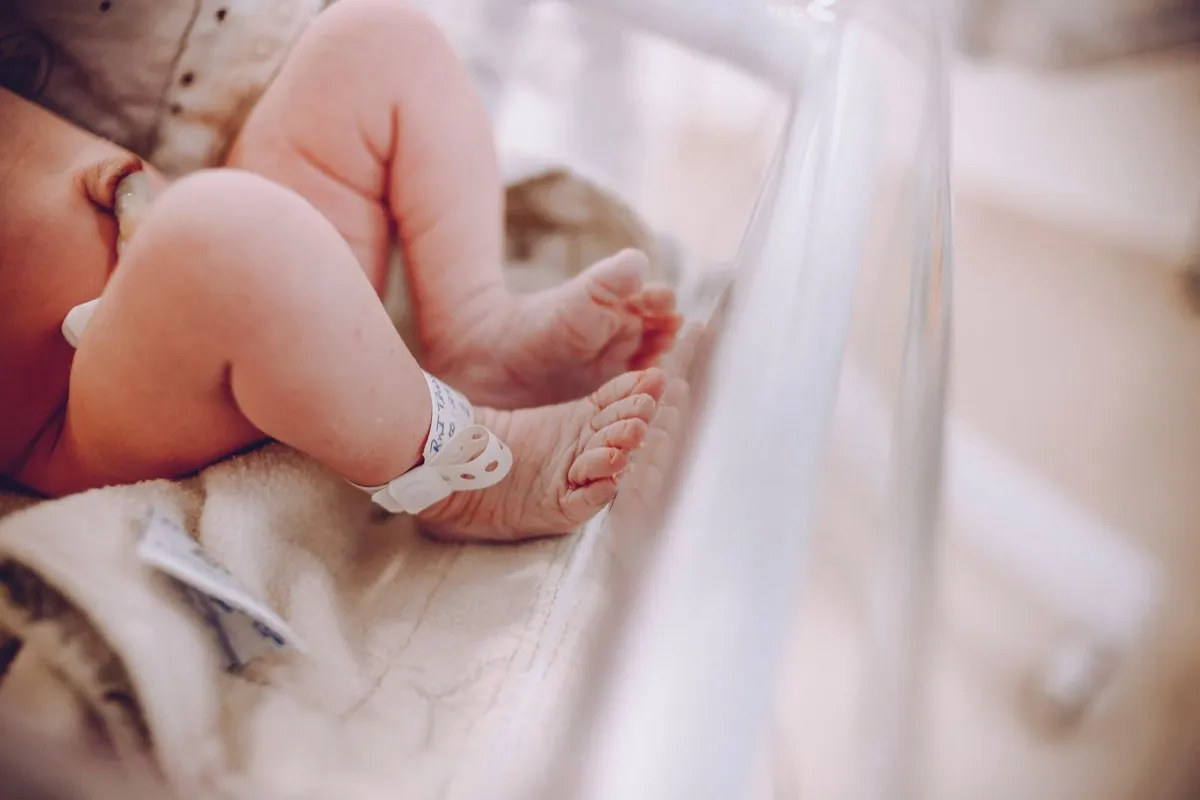
What Newborn Studies Show About Caesarean Birth
A 2019 study by Mulkey and colleagues compared 118 low-risk term newborns under 72 hours old. Of these, 62 were born vaginally, 22 by caesarean after labour and 34 by elective caesarean. Heart rate variability, a measure of autonomic nervous system function, did not differ by delivery mode. The authors concluded that overall autonomic tone is not altered in low-risk term newborns.
The same study found two small differences. Babies born by caesarean after labour showed a higher asymmetry index and lower relative gamma power on EEG than the other two groups. These are brain-wave measures taken in the first days of life. The study did not show that they matter for a child’s development.
A 2018 Lancet review by Sandall and colleagues adds context. It describes emerging evidence that babies born by caesarean have different hormonal, physical, bacterial and medical exposures, and that these can subtly alter neonatal physiology. Its listed short-term risks are altered immune development, a higher likelihood of allergy, atopy and asthma, and reduced gut microbiome diversity.
What Large Studies Say About Later Development
Large population studies show a small statistical link between caesarean birth and later diagnoses of autism spectrum disorder and ADHD. Sibling comparisons and a 2026 cohort suggest family and other factors explain much of it. A 2019 meta-analysis of 61 studies and 20.6 million deliveries found odds of 1.33 for autism and 1.17 for ADHD.
| Study | Whole-group result | Result after accounting for family or confounders |
|---|---|---|
| Zhang, 2019 meta-analysis, 61 studies | Autism odds ratio 1.33, ADHD 1.17 | Not a sibling analysis. No association with depression or psychosis |
| Curran, 2015, Swedish autism study | Hazard ratio 1.21 elective, 1.15 emergency | Sibling pairs, fully adjusted: odds ratio 0.89 elective, 0.97 emergency |
| Curran, 2016, Swedish ADHD study | Hazard ratio 1.15 elective, 1.16 emergency | Sibling analysis: 1.05 elective, 1.13 emergency |
| Xiao, 2026, Nurses’ Health Study II | Some suggestion in crude analyses | Fully adjusted: autism odds ratio 1.02, ADHD 1.06 |
Curran’s autism study concluded that the association was due to familial confounding by genetic or environmental factors. The ADHD study noted that if caesarean birth were the cause, the link would be expected to persist for both elective and emergency caesareans. In siblings it persisted only for emergency ones. Xiao’s team wrote that their study does not support the hypothesis that caesarean birth increases the risk.
The 2019 meta-analysis authors concluded that caesarean births are associated with autism and ADHD irrespective of caesarean type. They called for studies of the mechanisms. Results varied widely between the pooled studies, with heterogeneity of 69.5% for autism and 79.2% for ADHD. The 2026 cohort analysed 29,352 mothers and their children for autism and 27,704 for ADHD.
An odds ratio describes a pattern across a population. It cannot tell you what will happen to your baby, and it does not show that the operation caused anything.
A pattern in a crowd is not a verdict on one baby.
Caesarean Births in South Africa
Caesareans are far more common among privately insured South Africans than in the public sector, so many local parents face this question. A 2019 PLoS One analysis by Solanki and colleagues of 2015 claims from 10 medical schemes found a caesarean rate of 73.6%. In a 2020 South African Medical Journal paper, the same group reported public sector rates of 24.1% in 2015 and 27.4% in 2017.
| Setting | Caesarean rate | Year and data |
|---|---|---|
| Private sector (medical scheme members) | 73.6% | 2015, 4,815 of 6,542 births, 2019 PLoS One analysis |
| Public sector | 24.1% | 2015, District Health Barometer data, 2020 SAMJ paper |
| Public sector | 27.4% | 2017, 2020 SAMJ paper |
The authors note that caesarean birth is not done on maternal request in the public sector. They also note that no study could give the specific obstetric reasons behind the high private rate. Their 2019 analysis concluded that private sector rates are considerably higher than the safe rates recommended by the World Health Organization. The wider question of birth and a baby’s nervous system is covered separately.
Where Infant Craniosacral Therapy Fits
Research has not shown that babies born by caesarean need craniosacral therapy. It has not shown that CST changes anything related to birth mode. A PubMed search on 12 October 2026 found no trial of CST in caesarean-born babies. The 2024 meta-analysis by Ceballos-Laita, Ernst and colleagues found CST ineffective for infant colic, preterm infants, cerebral palsy and visual function deficits.
The Reset Room in Houghton Estate is led by Dr Safeera Kholvadia, a medical doctor. The infant craniosacral therapy page describes a full clinical assessment before each session, with extremely light touch. Parents sometimes come after a caesarean, a long labour or an assisted delivery. The site presents CST as complementary to paediatric care. No outcome can be promised.
The first step is an initial consultation. Your baby’s delivery record helps. A caesarean-born baby who cries constantly and cannot be soothed needs the same paediatric review as any other baby before anything else is considered.
What Most Parents Get Wrong About C-Sections and Babies
Worry after a caesarean often comes from reading a statistical association as a personal verdict. The research does not support blaming the operation for a baby’s later difficulties. A necessary caesarean is not something to feel guilty about. These are the common misreadings:
- Assuming a caesarean explains any later difficulty. The links in large studies shrink or vanish in sibling comparisons, so other family and pregnancy factors are more likely.
- Treating unsettled behaviour as a birth injury. Crying, poor feeding and sleep trouble have many causes that a paediatrician should check first.
- Reading an odds ratio as individual risk. A pooled figure of 1.33 describes a population pattern, not your baby.
- Feeling guilty about a medically indicated caesarean. The Lancet review calls the procedure life-saving when medically indicated.
- Looking for a birth-mode explanation first. Unsettled behaviour has many medical causes, and a paediatric review comes before any therapy.
If something about your baby worries you, bring it to your paediatrician. You are allowed to ask questions about the birth you had.
Frequently Asked Questions
Does a C-section harm a baby’s brain or nervous system?
Research has not shown that a caesarean section harms a baby’s brain or nervous system. In a study of 118 low-risk term newborns, heart rate variability, a measure of autonomic function, did not differ by delivery mode. A caesarean can be life-saving when medically indicated.
Are C-section babies more likely to have autism or ADHD?
Large studies find a small statistical link, but it weakens when families are accounted for. A 2019 meta-analysis found odds of 1.33 for autism and 1.17 for ADHD, while a Swedish sibling comparison for autism found no association and a 2026 US cohort found none after adjustment.
Do C-section babies need craniosacral therapy?
Research has not shown that babies born by caesarean section need craniosacral therapy. A baby who is feeding and settling normally needs routine paediatric care. Parents of an unsettled baby should see a paediatrician first, and any CST should be complementary to that assessment.
How common are C-sections in South Africa?
Caesarean sections are far more common among privately insured South Africans than in the public sector. A 2019 analysis by Solanki and colleagues found 73.6% of 6,542 births among members of 10 medical schemes in 2015, and a 2020 paper reported 24.1% in public facilities that year and 27.4% in 2017.
Is a C-section baby’s crying or poor feeding caused by the birth?
Crying or feeding trouble in a caesarean-born baby has many possible causes, and birth mode has not been shown to be the cause. A paediatrician should check feeding, reflux, infection and other medical causes first. Persistent unsettled behaviour is a reason to book an assessment rather than wait.
Disclaimer. General health information, not medical advice. Decisions about delivery route belong with your obstetrician. If your baby is unwell, feeding poorly or unusually drowsy, seek urgent medical review.