
The evidence that craniosacral therapy (CST) calms the stress response is thin and mixed.
A sham-controlled trial of 54 people with chronic neck pain found no significant group difference in perceived stress. Two sham-controlled trials found anxiety differed between groups. A small trial in firefighter cadets reported lower stress hormones after five weekly sessions.
Touch in general has research behind it. A 2024 meta-analysis of 137 studies found benefits for anxiety, depression and pain. Its abstract does not identify craniosacral therapy among the interventions pooled. The research on why touch might settle the stress response is itself unsettled, even for massage. How do you know when you are less stressed?
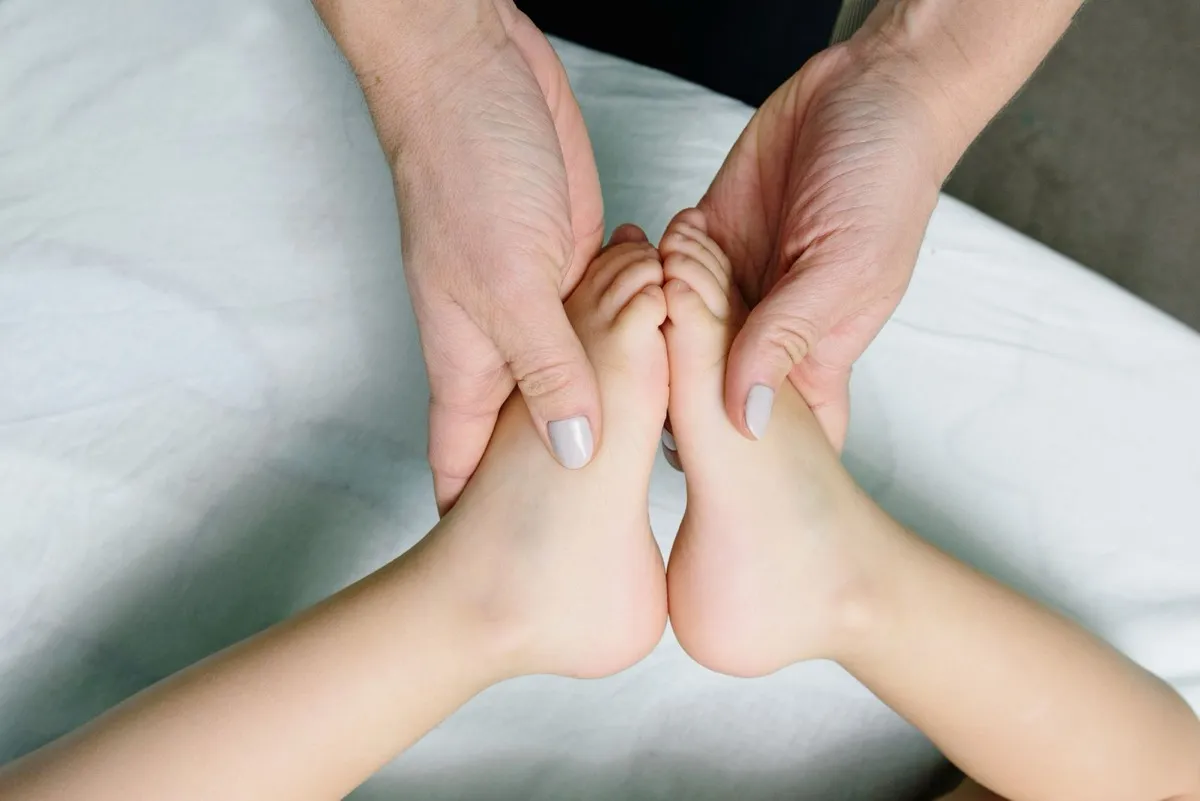
What the Stress Response Involves
The stress response is the body’s rapid reaction after the brain detects a real or potential threat. It is centred on two systems: the sympathetic-adreno-medullary (SAM) axis and the hypothalamus-pituitary-adrenal (HPA) axis. Godoy and colleagues’ 2018 review calls these the two major components of the stress response. It notes that the response differs with the timing and duration of the stressor.
The World Health Organization notes that for many people stress reduces over time as the situation improves or as they learn to cope. It also notes that stress can cause or worsen anxiety and depression, which require access to health care. The article on the psychophysiology of stress covers the physiology in depth. This guide concentrates on touch.
How Touch Is Thought to Settle the Stress Response
Researchers have proposed that touch settles the stress response through specialised nerve fibres. The evidence for benefit is broader than the evidence for any single mechanism. The table sets three strands side by side: a candidate nerve pathway, the pooled results of touch interventions, and a review that tested whether cortisol explains the benefits of massage.
| Strand | Finding | Relevance to CST |
|---|---|---|
| C-tactile afferents (Löken and colleagues, 2009) | Low-threshold unmyelinated mechanoreceptors responded most vigorously to soft brush stroking at 1 to 10 cm per second, the speeds perceived as most pleasant; the authors suggest they signal affiliative social body contact | Concerns slow stroking, and CST is described as held light touch, so this is a candidate mechanism and not evidence about CST |
| Touch interventions overall (Packheiser and colleagues, 2024) | Meta-analysis of 137 studies against no-touch controls: reduced state anxiety (g = 0.64), trait anxiety (0.59), depression (0.59) and pain (0.69) in adults; cortisol effect (0.78) reported in newborns | Included many kinds of touch, and the abstract does not name CST; the authors note small-study bias and that conditions cannot be blinded |
| Massage and cortisol (Moyer and colleagues, 2011) | Between-group cortisol effect sizes almost all small (0.05 to 0.30) and nonsignificant; the authors concluded cortisol cannot be the cause of massage’s benefits | Warns against assuming that a cortisol fall explains benefit from any hands-on therapy |
A fair reading of the 2024 meta-analysis and the other strands is that touch is associated with benefits for how people feel. The route from touch to the stress response remains unclear. Moyer’s team concluded that other causal mechanisms, still to be identified, must be responsible for massage’s clinical benefits.
Feeling better and knowing why are two different findings.
Why Stress Is Hard to Measure and Test
Stress can be measured by asking people how stressed they feel, by measuring hormones, or by recording how the body behaves. These measures do not reliably agree. Campbell and Ehlert’s 2012 review of laboratory stress-test studies examined 49 studies that measured both. It found significant correlations between cortisol responses and perceived emotional stress in approximately 25% of them.
That dissociation matters for CST research. A trial that reports lower cortisol and a trial that reports unchanged perceived stress are not contradicting each other. They measured different things. A reader needs to know which measure a claim rests on. Be cautious when a hormone result is described as meaning people feel less stressed.
Design adds a second difficulty. Packheiser’s team noted the impossibility of blinding in trials that compare touch with no touch. Sham-controlled CST trials try to solve that with a sham. Haller’s trial used a light-touch condition, where patients were blinded. Matarán-Peñarrocha’s used a disconnected ultrasound. How convincing a sham is remains a design question. In principle, expectation can shape a self-reported outcome such as perceived stress.
What CST Studies Measured About Stress
Three CST trials measured something close to stress. They measured different things: perceived stress, anxiety and stress hormones. The results differ accordingly. The clinical reviews did not assess stress at all. The table gives each study’s design and the stress-related result as its abstract or full text reports it.
| Study | Design | Stress-related outcome | Result |
|---|---|---|---|
| Haller and colleagues, 2016 | 54 blinded people with chronic neck pain; eight weekly CST sessions versus light-touch sham | Perceived stress (questionnaire); anxiety | No significant group difference for stress perception; anxiety differed between groups only at week 20 (P = 0.020) |
| Matarán-Peñarrocha and colleagues, 2011 | 84 people with fibromyalgia; CST versus simulated ultrasound for 25 weeks | State and trait anxiety | Anxiety differed between groups after treatment and at six months, and at one year only sleep quality differed; the authors conclude it improved anxiety and quality of life, and the direction of the difference is not stated in the abstract |
| Wójcik and colleagues, 2023 | 57 male firefighter cadets; five weekly structural CST sessions versus a control in which the therapist only held the head | Blood cortisol and CRH | Cortisol differed between groups after therapy; CRH also differed before treatment; the same cadets’ HRV paper found changes in the control group too |
The fibromyalgia trial described itself as double-blind. It assessed participants at baseline, 10 minutes, six months and one year after treatment. That gives it the longest follow-up of the three. Its anxiety differences faded by one year. An early signal is not a lasting one.
Two details limit how far these results can be taken. In Haller’s trial, pain intensity was the primary outcome. The secondary outcomes, including stress and anxiety, were analysed as exploratory without adjustment for multiple testing. So the single anxiety result at week 20 is a tentative signal.
The cadet trial’s cortisol result is covered with its limitations in the article on craniosacral therapy and the autonomic nervous system. It is a single small study in young men.
The neck pain trial gives the clearest picture of what a sham-controlled test of CST involves. Both groups attended eight weekly sessions of 45 minutes. Each session was run by one of four licensed physiotherapists with advanced CST qualification and on average six years of clinical practice. The sham was a light-touch condition. 81.5% of the participants were women.
The same trial found that CST patients reported significantly lower pain intensity than sham at week 8. The score was 21 mm lower on a 100 mm scale (95% confidence interval 9.4 to 32.6 mm). There was no significant group difference in perceived stress.
The authors listed the small sample and the allocation of three therapists to CST and one to the sham as limits on comparability. The practice’s own CST sessions usually run 60 to 90 minutes, longer than the trial’s 45.
The reviews summarised in what craniosacral therapy is include two whose abstracts list conditions, and neither lists stress. A 2019 meta-analysis found benefit for chronic pain. 2024 reviews of 15 and 24 trials found no significant benefit. So none tells a reader whether CST helps with stress.
What Most People Get Wrong About Touch and Stress
Two assumptions recur in claims about touch and stress. One is that a good feeling is a measured outcome. The other is that a plausible mechanism is a demonstrated one. Four statements that circulate around touch and stress show where that happens. Each is set beside what the sources above support.
- “If it feels calming, the stress response has been regulated.” Haller’s trial found no significant group difference in perceived stress, so feeling calm in the room and measured stress over weeks are different things.
- “Lower cortisol is the proof.” Moyer’s review found massage’s cortisol effect generally very small and not distinguishable from zero, even where benefits for anxiety and pain were established.
- “Any gentle touch works the same way.” The C-tactile research concerns slow stroking at particular speeds, and Packheiser’s meta-analysis found that touch involving objects or robots gave similar physical but lower mental health benefits (0.34 versus 0.58).
- “Trials show CST for stress works.” The trials above measured different outcomes, had mixed results and were small. The clinical reviews whose abstracts list conditions did not include stress.
What This Means for Someone Under Stress
For ongoing stress, the first steps are a conversation with a doctor or registered mental health professional and attention to what is driving the stress. Dr Safeera Kholvadia, a medical doctor, offers craniosacral therapy and nervous system regulation at The Reset Room in Houghton Estate, Johannesburg, as complements to that care. The initial consultation lasts 60 to 90 minutes.
Body-oriented approaches tested for trauma-related symptoms are reviewed in the article on somatic psychotherapy research. The practice’s craniosacral therapy page describes its service. The evidence above supports describing it as a complement and not a treatment for stress.
Frequently Asked Questions
Does craniosacral therapy reduce stress?
Evidence that craniosacral therapy reduces stress is limited and mixed. A sham-controlled trial of 54 people with neck pain found no significant difference in perceived stress, anxiety differed between groups in two sham-controlled trials, and a trial of 57 firefighter cadets reported lower cortisol. These findings are not enough to establish a stress-reducing effect.
Does massage or touch lower cortisol?
Massage has not been shown to lower cortisol reliably. Moyer and colleagues’ 2011 review found its between-group cortisol effects small and nonsignificant, apart from a larger effect in children based on three studies. A 2024 meta-analysis reported a cortisol effect of touch in newborns, which does not apply directly to adults.
Can touch reduce anxiety?
Touch interventions have been associated with reduced anxiety. A 2024 meta-analysis of 137 studies found effects for state anxiety (g = 0.64) and trait anxiety (0.59) in adults compared with no touch. The authors noted small-study bias and the impossibility of blinding, and the abstract does not name craniosacral therapy among the interventions.
What is the stress response?
The stress response is the body’s rapid reaction to a real or potential threat that the brain detects. It centres on the sympathetic-adreno-medullary axis and the hypothalamus-pituitary-adrenal axis, which Godoy and colleagues call the two major components of the response. Its pattern varies with how long the stressor lasts.
Is craniosacral therapy safe when I am stressed?
In Haller’s 2016 trial of 54 people with chronic neck pain, no serious adverse events were reported. Six patients in the craniosacral group and eight in the sham group had minor events, such as increased neck pain, tiredness, strong emotional reactions or weeping. Medical review comes first, particularly for new or severe symptoms.
Disclaimer. General health information, not medical advice. If stress is affecting your sleep, mood or daily functioning, see a doctor or a registered mental health professional.