
Research has not established how many craniosacral therapy (CST) sessions chronic stress needs.
In trials of CST for chronic pain, treatment ran from 1 to 50 sessions. The reviewers could not say which number works best. A plan can rest on other things. One is a defined first block of sessions. Another is a clear check at the end of it.
If you are tired of waiting for stress to ease, you are not alone. CST is a complementary therapy. The evidence for it is mixed, and it does not replace a medical assessment or treatment for stress-related illness. If someone gave you a number, what would you do with it?
What the Trials Used: 1 to 50 Sessions, Median 7
Published CST trials give a range. They do not give a prescription. A 2019 meta-analysis by Haller and colleagues covered ten randomised trials in chronic pain. It found treatment plans of 1 to 50 sessions, with a median of 7, delivered over no more than 25 weeks. None of those trials tested stress as the condition.
| Condition studied | CST sessions | Trial |
|---|---|---|
| Tension-type headache | 1 | Hanten, 1999 |
| Low back pain | 3 over 2 weeks | Bialoszewski, 2014 |
| Pelvic girdle pain | 5 over 8 weeks | Elden, 2013 |
| Lateral epicondylitis | 6 over 3 weeks | Nourbakhsh, 2008 |
| Migraine | 6 over 4 weeks | Arnadottir, 2013 |
| Migraine | 8 over 8 weeks | Mann, 2012 |
| Neck pain | 8 over 8 weeks | Haller, 2016 |
| Low back pain | 10 over 10 weeks | Castro-Sanchez, 2016 |
| Fibromyalgia | 40 over 20 weeks | Castro-Sanchez, 2011 |
| Fibromyalgia | 50 over 25 weeks | Mataran-Penarrocha, 2011 |
Eight of the ten trials used 10 sessions or fewer. The two fibromyalgia trials used 40 and 50, and they pull the average up. That is why the median of 7 is the fairer summary. Haller’s own 2016 neck pain trial of 54 people gave 8 weekly CST sessions and followed up at week 20. Its abstract lists stress perception as a secondary outcome. It does not report a difference on it.
The 2019 review concluded that CST showed effects on pain and function lasting up to six months compared with sham treatment. Its authors also said they could not draw conclusions about the number of sessions required.
A 2024 review by Ceballos-Laita, Ernst and colleagues covered 15 randomised trials in any condition. It reached the opposite conclusion. It found no benefit in any condition it assessed, and it judged two trials in children seriously flawed. Both reviews are published, and they disagree.
A second 2024 meta-analysis of 24 trials (Amendolara and colleagues) also found no significant effects overall.
How Long Recovery From Prolonged Stress Takes
Recovery from prolonged, heavy stress is measured in months to years in follow-up studies of people with stress-related exhaustion. The World Health Organization notes that for many people stress reduces over time. It eases as the situation improves or as they learn to cope with it.
Swedish follow-up studies of patients treated for stress-related exhaustion show how long the tail can be. Österberg and colleagues examined 54 patients about two years after their initial sick leave. Glise and colleagues invited 217 former patients to follow-ups over seven years.
| Follow-up point | What the follow-up found | Study |
|---|---|---|
| About 2 years | Most patients were substantially recovered, and 13% still met the criteria for exhaustion disorder | Österberg, 2014 |
| 7 years | Almost half perceived fatigue and 73% reported decreased stress tolerance | Glise, 2020 |
| 7 years | A third were clinically judged to still have stress-related exhaustion | Glise, 2020 |
These were patients with a diagnosed exhaustion disorder in Swedish care. They were not craniosacral therapy patients. The studies say nothing about whether CST changes the timeline. They do show that a long stress history should not be expected to resolve in a handful of sessions. Reduced stress tolerance can outlast the other symptoms.
How a First Block of Sessions Works at The Reset Room
At The Reset Room in Houghton Estate, Johannesburg, care starts with an initial consultation of 60 to 90 minutes. The practice\’s four-session block is called the ARC Integration Phase. The block gives you and Dr Safeera Kholvadia a clinical picture after session four. It promises no recovery date.
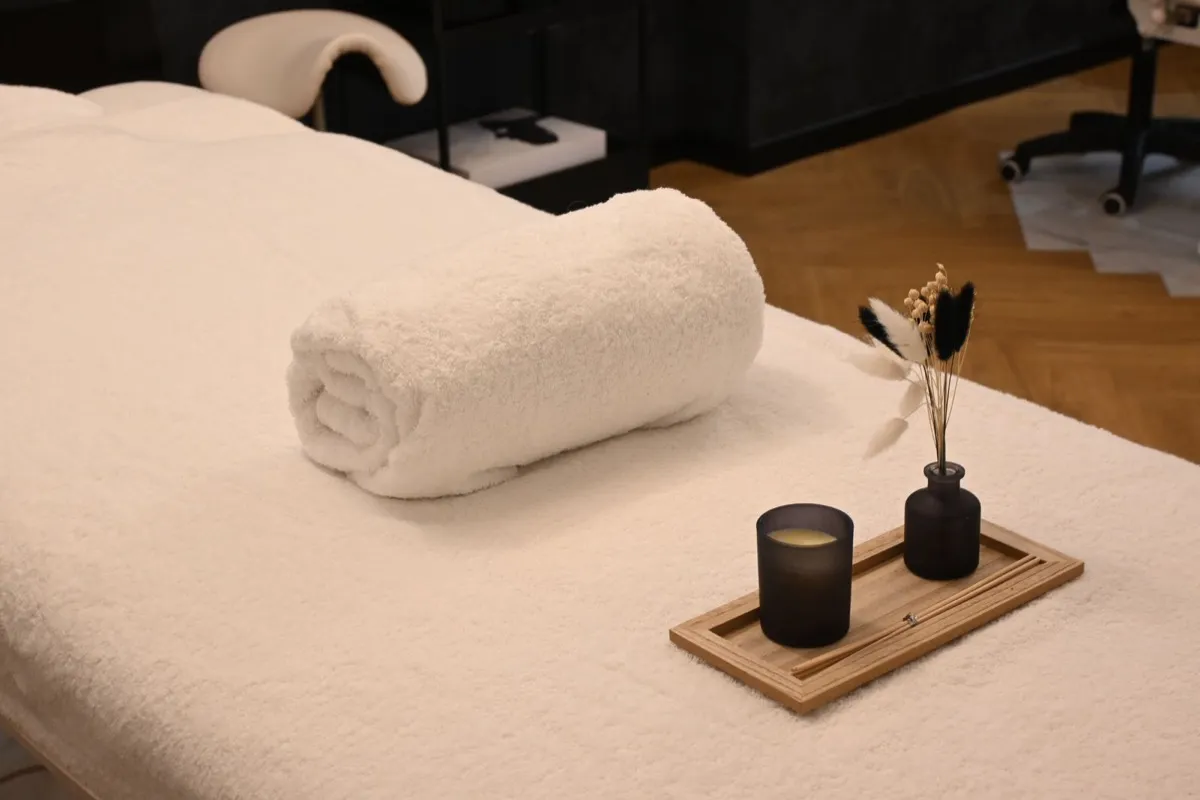
Craniosacral therapy sessions are usually 60 to 90 minutes. You stay fully clothed on a treatment table. The practitioner uses very light touch at the head, sacrum and spine. The practice describes the four sessions like this:
- Session one identifies the main pattern of guarding and protective adaptation in your nervous system.
- Session two applies craniosacral therapy and somatic work to that pattern.
- Session three deepens the regulation from session two, with clinical hypnotherapy where indicated.
- Session four anchors the regulated state, names what is complete and identifies what needs ongoing support.
Session four is where the session-count question gets a personal answer. The practice’s own CST page says chronic or complex patterns may benefit from ongoing work. The practice’s CST work on chronic stress is offered as a complement to medical care, never a replacement for it.
You can make that review concrete. Before session one, choose three or four markers from the common signs of a dysregulated nervous system, such as how long you take to fall asleep, how often you wake at night, how quickly irritation arrives and where tension sits. Score each out of ten, then score them again after session four. A calm hour on the table matters less than a changed week at home.
What Most People Get Wrong About Session Numbers
Mistakes about session numbers usually come from treating therapy like medication with a fixed dose. Research has not established a dose for CST in chronic stress. A plan built on a promised number rests on nothing the research can support. These five are the common ones:
- Expecting a fixed number. The trials above ranged from 1 session to 50, and the 2019 review could not identify the number that works best.
- Judging progress by how calm a session felt. Relaxation on the table is pleasant, but lower reactivity in the weeks between sessions is the change worth tracking.
- Treating sessions as the whole plan. Workload, sleep debt, money worries and conflict keep feeding the stress response. The World Health Organization notes that for many people stress eases as the situation improves.
- Skipping a medical check. The World Health Organization says stress can cause or worsen anxiety and depression, which require health care. Persistent fatigue, poor sleep or low mood deserve a doctor’s assessment first.
- Continuing or stopping without a review. A block of sessions needs a decision point. Make it with your practitioner, based on your markers rather than habit or a package size.
Stress rarely leaves on a schedule. Give your body a clear first block, then check in with yourself and your doctor.
Plan a first block of sessions
Doctor-led consultation and nervous system regulation.
The Reset Room, Houghton Estate, Johannesburg.
Frequently Asked Questions
How many CST sessions do I need for chronic stress?
Research has not established a number of CST sessions for chronic stress. Trials of CST for chronic pain used between 1 and 50 sessions, with a median of 7. At The Reset Room, progress is reviewed at set points to see what has changed and what needs further work.
How long does it take to recover from chronic stress?
Recovery from chronic stress can take months to years in follow-up studies, and the World Health Organization notes that for many people stress eases as the situation improves. In a Swedish follow-up of former patients treated for stress-related exhaustion, a third were still clinically judged to have it seven years after seeking care.
What if four sessions do not help my stress?
Four sessions without clear change are a signal to review the plan, not to continue automatically. The review should cover your markers, any medical causes still to be excluded and whether the stress load itself has changed. Some people need a different approach, such as psychological therapy or a medical assessment.
Is craniosacral therapy proven for chronic stress?
Craniosacral therapy has not been proven for chronic stress. A 2019 meta-analysis found benefits for chronic pain, and 2024 meta-analyses of 15 and 24 trials found no significant benefit overall. Neither summary lists stress as a studied condition, so CST is best treated as a complement to medical care.
Should I see a doctor before starting sessions for chronic stress?
A doctor’s assessment is sensible before starting sessions for chronic stress, especially with persistent fatigue, poor sleep or low mood. The World Health Organization says stress can cause or worsen anxiety and depression, which require health care. The initial consultation at The Reset Room includes a clinical history.
Disclaimer. General health information, not medical advice. Session numbers vary between people. If stress is affecting your sleep, mood or work, see a doctor or a registered mental health professional.